Greetings and a warm welcome
to our very first issue of West Coast FOCUS for 2015!
This newsletter contains a synopsis of the main activities that took place in West Coast Community Foundation (WCCF) in 2014. You will notice that WCCF have instituted some major shifts in its program implementation and this was done in order to stay in touch with our main beneficiaries and also to have greater internal focus.
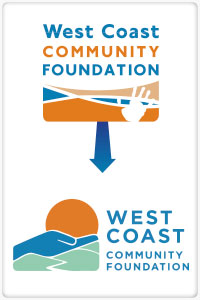
The biggest and probably the most exciting transformation the organization underwent was in the new logo that was developed. We have refreshed our logo to reflect who we are today and to symbolize our dynamic future.
The aim is to show how local people are driving their own development with the support of external partners as contributing factor and not sole-driving factor. West Coast FOCUS is a collection of inspired and instructive articles about real, honest, down-to-earth folks who work hard to live deliberately, but who are not afraid to admit the struggles we sometimes face.
We are honored to share the work of so many committed and selfless people. Please visit our website on www.wccf.org.za or follow us on Facebook www.facebook.com/WCCF.SA to be updated with our most current information about the work of the foundation. Also, feel free to leave comments on the website to share your thoughts or ask us any question.
We appreciate your support and are so happy to have you as a reader of West Coast FOCUS.
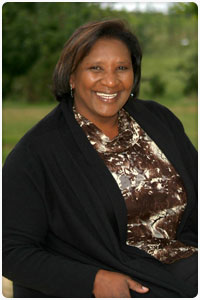
With warmest thanks, Johanna Hendricks, Chief Executive Officer
WCCF is proud to announce the launch of the
new organizational logo as part of the ongoing
evolution of our organizations’ brand.
The organization has grown and evolved over the last 14 years, and we felt it was time for a change. We have refreshed our logo to reflect who we are today and to symbolize our dynamic future. This wasn’t a decision we made lightly as we are proud of our rich history.
That’s why our new logo retains core elements, including the “helping hand” and color scheme.
In the upcoming months we have to update all our marketing literature, online presence, stationery, etc. with the new logo. We are aware that changing a logo is a process that can involve many steps and take some time, so we will finalize it gradually. We will therefore keep using existing material while stocks last. If you have used the current WCCF logo in any of your marketing materials, please assist us in updating them.
Meanwhile, in case you are in the process of producing some new literature or media and you would like to use new WCCF logo please contact Jeremy Maarman.
Building shared national identity and improved social cohesion through young people
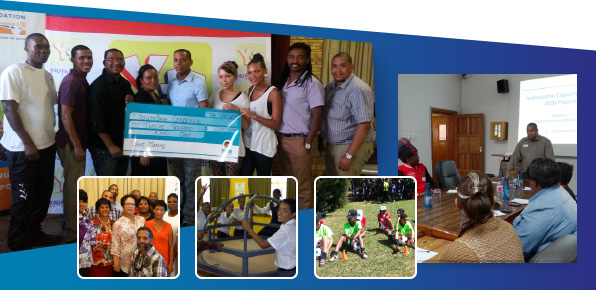
West Coast Community Foundation (WCCF) has been instrumental in the formation of the South African Youth Leaders Network (SAYLN) which is a network of 14 youth-focused organizations from four South African provinces. The network is aimed at addressing the lack of social integration and general socialization between young people of diverse backgrounds. We are of the opinion that by encouraging understanding and tolerance amongst young people of diverse backgrounds it will form the beginning of a shared national identity and improved social cohesion.
SAYLN does this by implementing bi-annual Managing Diversity Youth Camps and also annual youth conferences in different provinces. During 2014 the network undertook its’ third bi-annual Managing Diversity youth camp where 230 young people from member organizations came together to learn and share with each other. This camp took place in Grabouw, Western Cape, from 6-10 October 2014.
From 10-13 March 2015 SAYLN will implement a Managing Diversity Training course for 25 youth workers from member organizations. This training is part of the strategy of SAYLN to empower youth leaders with the knowledge and skills needed to promote social cohesion amongst young people in the communities where they work.
YouthBank – encouraging youth giving
The question of whether to give a person a fish or teach her to catch her own is long past. Today, the question is, "Who owns the fish?" Rural communities are familiar with this question, as they grapple with the realities of outside entities owning or controlling such precious assets as forests, water and mineral rights. But whatever their circumstance, every community holds some assets in common, whether they are cultural, natural or financial resources. Today we must ask how to build and use these resources for the benefit of the community.
Through the YouthBank (YB) initiative young people from small communities are given the opportunity to engage constructively in development initiatives and also share their experiences with youth from other parts of South Africa and the world through international platforms. YB shows young people that they have assets/skills and that they are valuable to their community and can thus take the confidence to become active players in the development of their communities.
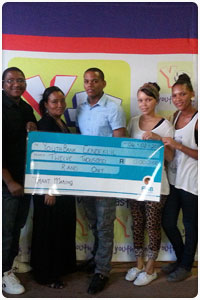
WCCF currently facilitates two YouthBank initiatives in Eendekuil and Nuwerus, respectively and collectively they raised just under R24 000.00. This is represents an increase from R10 000.00 in 2013.
Within the MyMachine project in Flanders, children inspired us to start a cross-border cooperation between schools and organisations in Belgium, Flanders and countries in the South, with a pilot in South Africa.
Children invent ‘dream machines’ that not only can be useful for their own lives but also will improve the living environment or solve the problems of other children. Some children wanted for example a ‘Hurricanefixer’, a machine that can be used in damaged regions or a ‘Toys-Fold-up’-machine, a machine that delivers toys to poor countries in the South.
There is a strong relation between global and technical education in this project which is also based on the unique collaboration between the 3 educational levels. Children and students are involved in a bilateral exchange. By working together in an intense MyMachine process they also get a better understanding and awareness of the living environment of their peers.
In 2012 MyMachine Global Foundation received a grant from the Flemish government to run a 2-year MyMachine pilot in collaboration with one or more partner countries in the South. The provincial government of West Flanders also supports this project. This pilot in South Africa was possible thanks to the cooperation with the West Coast Community Foundation in Malmesbury and the Cape Peninsula University of Technology in Cape Town.
Participating schools in South Africa
– Laerskool Swartland
– Malmesbury
Berzelia Primary School
– Atlantis
Cape Peninsula University of Technology, Department Industrial Design
– Cape Town
West Coast College, Atlantis
– Number of children involved: 989
– Number of students involved: 8
– Numbers of educational staff
(lecturers, teachers, …) involved: 26
The dreammachines
Scrappy, the recycling robot
During the MyMachine pilot it was interesting to discover that both South African and Belgian children wanted ‘a recycling machine’ at their playground. The result is Scrappy, the recycling robot, a robot caracter made of recycling materials (car parts, …) and placed on top of a ‘merry-go-round’ with 3 bins inside. In this way children can sort out 3 types of waste in a playful, funny way. During a co-design workshop the children made drawings of the characteristics and visual look of the robot character.
The time-traveling machine
South African inventor Valentino, 10 year, dreamt of a special time machine. With this machine he could fly anywhere he wanted and back in time to see everybody back again. This machine exist of 3 main parts: a fixed and moving platform and a dome. Two children can enter the machine by the dome and take a seat, when the children move the machine will start shaking slowly. While relaxing a projection will appear on the inside of the dome, together with music a special atmosphere will be created that gives you the feeling of time travelling.
Institutional Capacity Building (ICB)
Never more so than now has organizational sustainability been such a high priority for donors, organizations and beneficiaries. The biggest challenge with regard to organizational sustainability lies in the understanding thereof at the community level.
Yes, donors and large development stakeholders are well versed with the theories surrounding organizational sustainability, but what does sustainability mean to an organization in the West Coast. Those same organizations that often don’t get any financial support because they cannot prove their sustainability in the ways that are expected “norms & standards” from external donors. The Institutional Capacity Building (ICB) program is aimed at clarifying important development cornerstones like sustainability to the people at the community level, making the topic more understandable and relevant to the people at the coalface of community development.
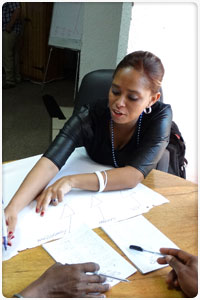
Trough ICB program a total of 30 organizations have been assisted over the last four years. These organizations are all funded yet classified as “at risk” by the Department of Social Development (DSD). The main objective is to build the capacity of these organizations by exposing them to individually agreed Mentoring & Coaching intervention that includes 5 onsite visits per organization and also two classroom-based Workshops.
Background of WCCF
West Coast Community Foundation was established in 1999 and registered in 2001. A mandate, from 54 Community Based Organizations was given to the Goedgedacht Trust, to establish a Community Foundation for the West Coast. It is now a registered Non-Profit Organization and Public Benefit Organization with Section 18A status.
West Coast Community Foundation (WCCF) has been robustly promoting projects that display how communities themselves are taking ownership of development initiatives.
Vision:
Working towards self-reliant, thriving communities on the West Coast. Mission: We mobilize resources and facilitate giving in order to make grants and to build the capacity of local community-led initiatives.